
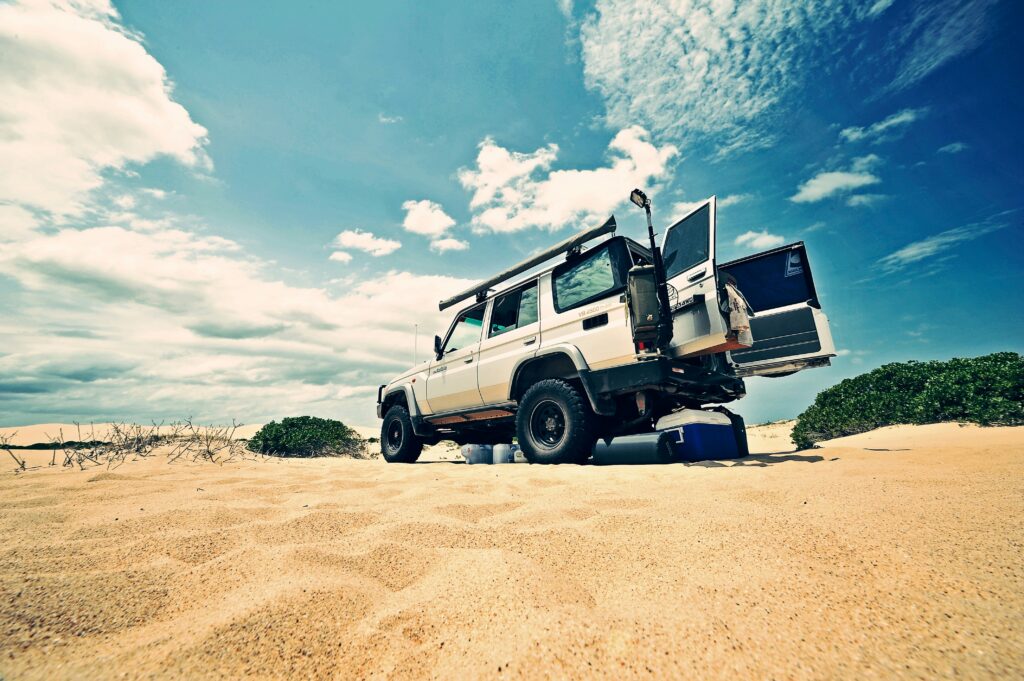
Photo by John O’Nolan on Unsplash
When enthusiasts of four-wheel drive (4WD) vehicles opt for larger tires, they often do so to enhance off-road performance, improve ground clearance, and give their vehicle a more aggressive appearance. However, one critical modification that should accompany the installation of larger tires is regearing. Failing to regear properly can lead to a host of performance issues and potential mechanical problems. This article delves into the importance of regearing when increasing tire size on a 4WD vehicle, how you can decide if you need to do it, and when you absolutely have to.
Understanding Gearing and Tire Size
Before discussing the need for regearing, it’s essential to understand the relationship between gearing and tire size. In a vehicle’s drivetrain, gears multiply the torque produced by the engine and transmit it to the wheels. The gear ratio determines how many times the driveshaft rotates for each revolution of the tires. When you increase the tire size, you effectively change the final drive ratio, because the larger circumference of the tire requires more torque to turn. This change can significantly affect the vehicle’s performance.
Effects of Larger Tires on Performance
- Acceleration and Power Loss: Larger tires are heavier and have a larger rolling radius, which means the engine must work harder to turn them. Without regearing, this can lead to a noticeable decrease in acceleration and overall power. The vehicle may feel sluggish, and the engine may struggle, particularly at low speeds.
- Fuel Efficiency: An improperly geared vehicle with larger tires will consume more fuel. The engine will need to operate at higher RPMs from more frequent downshifts to maintain speed, especially when driving uphill or towing. This inefficiency can lead to increased fuel consumption and more frequent trips to the gas station.
- Transmission Stress: When the gearing is not adjusted to match the larger tire size, the transmission may experience additional stress. This can lead to overheating and premature wear, potentially resulting in costly repairs or even transmission failure. The engineers that integrated all of the drivetrain components selected each one for the idea operating points that the vehicle would operate at. Large tires increase the load on this system and the transmission (and more specifically the torque converter) is where this increased load becomes increased heat. Change one thing in the drivetrain and suddenly, you are now the powertrain engineer who needs to compensate for the change in operating points to avoid this increased stress.
- Off-Road Performance: Off-road enthusiasts often seek larger tires for better traction and clearance. However, without proper gearing adjustments, the benefits of larger tires can be negated. The vehicle may struggle to climb steep inclines or navigate rough terrain, as the engine and transmission work harder to compensate for the incorrect gearing.
Benefits of Regearing
- Restored Performance: Regearing your 4WD vehicle will restore the lost power and acceleration caused by larger tires. By selecting the appropriate gear ratio, you can ensure that the engine operates within its optimal RPM range where it was intended to, providing the performance you expect both on and off the road.
- Improved Fuel Economy: Properly matched gears can enhance fuel efficiency by allowing the engine to run at lower RPMs while maintaining the desired speed without constantly dropping gears at the slightest incline. This efficiency reduces fuel consumption and can lead to long-term savings.
- Reduced Mechanical Strain: By correctly regearing, you reduce the stress on the transmission and other drivetrain components. This leads to improved reliability and longevity of these parts, minimizing the risk of mechanical failures and expensive repairs. The added leverage of the reduced gear ratio allows your entire drivetrain to perform better and more reliably. The reduction in overshifting will also reduce heat and wear in the transmission.
- Enhanced Off-Road Capability: With the right gear ratio, your 4WD vehicle will perform better in off-road conditions. Whether you’re navigating rocky trails, mud, or steep hills, regearing ensures that your vehicle has the necessary torque to tackle challenging terrain effectively.
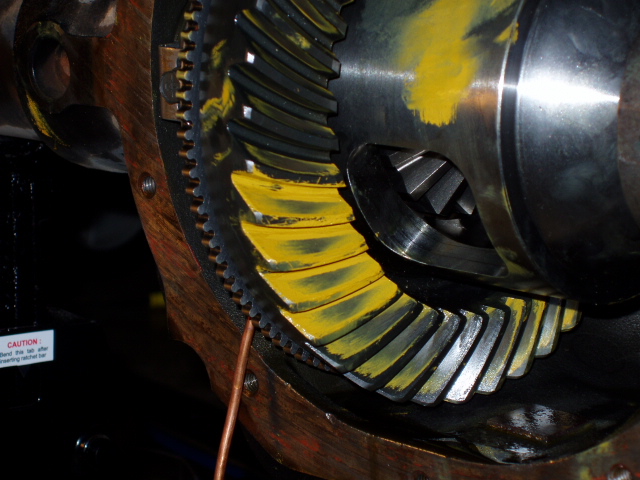
Example Differential Gear
Selecting the Right Gear Ratio for Larger Tires on a 4WD Vehicle

When upgrading to larger tires on your 4WD vehicle, it’s essential to select the correct gear ratio to ensure optimal performance and efficiency. This process involves understanding the impact of tire size on your vehicle’s gearing and using the ratio of the height of the old tire to the height of the new tire to calculate the appropriate gear ratio. Here’s a step-by-step guide to help you through this process.
Step 1: Gather Necessary Information
- Current Gear Ratio: Find out your vehicle’s current gear ratio. This information is often available in the owner’s manual, on a tag on the differential, or by contacting the manufacturer.
- Current Tire Size: Note the height (diameter) of your current tires. Tire sizes are usually printed on the sidewall in a format like 265/70R16, where the height can be calculated from these dimensions.
- New Tire Size: Determine the height of the new tires you plan to install.
Step 2: Calculate the Tire Height Ratio

The ratio of the old tire height to the new tire height helps determine the change needed in the gear ratio. Here’s how to calculate it:
⌈ Tire Height Ratio = Height of New Tire / Height of Old Tire ⌉
For example, if the old tire height is 30 inches and the new tire height is 35 inches:
⌈ Tire Height Ratio = 35 / 30 = 1.167 ⌉
Step 3: Determine the Ideal Gear Ratio
To find the new gear ratio, multiply the current gear ratio by the tire height ratio:
⌈ New Gear Ratio = Current Gear Ratio × Tire Height Ratio ⌉
Continuing with our example, if the current gear ratio is 3.73:
⌈ New Gear Ratio = 3.73 × 1.167 = 4.35 ⌉
Step 4: Choose the Closest Available Gear Ratio
Gear ratios are available in standard increments. Once you have calculated the ideal gear ratio, you will need to select the closest available gear ratio. In our example, a gear ratio of 4.35 is calculated. The closest standard gear ratios are likely 4.10 and 4.56. Since 4.35 is closer to 4.56, that would be the recommended choice.
Additional Considerations
- Vehicle Use: Consider how you use your vehicle. If you do a lot of highway driving, a slightly lower gear ratio might be better for fuel efficiency. For off-road driving, a higher gear ratio provides better torque and control.
- Engine Power and Transmission: Take into account your engine’s power and transmission type. Higher horsepower engines can handle lower gear ratios better than lower horsepower engines. Similarly, automatic and manual transmissions may have different optimal gear ratios.
- Consult a Professional: Consulting with a 4wd expert or an automotive engineer like BE can help ensure you select the best gear ratio for your specific needs and vehicle setup. We can provide insights based on practical experience and advanced calculations.
Example Calculation
Let’s go through an example step-by-step for clarity.
- Current Tire Size: 30 inches
- New Tire Size: 35 inches
- Current Gear Ratio: 3.73
⌈ Tire Height Ratio = 35 / 30 = 1.167 ⌉
⌈ New Gear Ratio = 3.73 × 1.167 = 4.35 ⌉
- Select Closest Available Gear Ratio:
- Standard gear ratios close to 4.35 are 4.10 and 4.56.
- 4.56 is closer to 4.35, so the recommended gear ratio is 4.56.
- A change in the duty application of the vehicle should also be considered. If the vehicle didn’t originally have a tow package, and towing is intended, it may make sense to aim at a slightly lower gearing if you’re choosing between two close ratios.
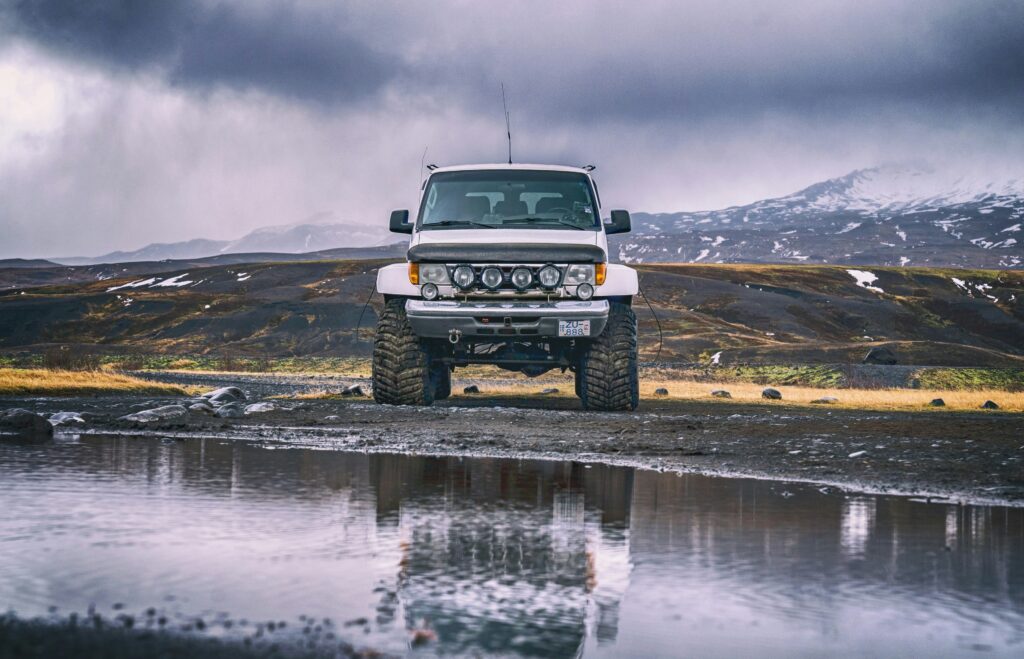
Photo by Jonatan Pie on Unsplash
By following these steps, you can ensure that your vehicle’s performance and efficiency are optimized when upgrading to larger tires. Proper regearing not only restores the lost power and torque but also enhances fuel efficiency and reduces mechanical strain, making your 4WD vehicle more capable both on and off the road.
If you have any questions about your four wheel drive application or thoughts on the topic, comment below!
Recent Comments