

Every project requires some amount of surveying the existing conditions of a site to get an idea of what point A is, so you can help the client get to point B. Back when I was working in NYC, I was the primary design engineer for a handful of buildings, while working at the two top notch NYC MEP firms where I got the foundation of my career; JB&B and RDA. When you’re a building’s primary engineer, you spend a lot of time there. These are only a handful of my building badges that I came across the other day while sorting some old work stuff.
The one that stands out here to me was the New York Public Library. I spent 18 months precisely documenting over 100 years worth of installed, abandoned, modified, and built on-top-of MEP systems all through the deepest reaches of this historic building. Hours and hours spent in hot tunnels with steam pipes that had lost their insulation (asbestos?), crawling through spaces not seen in decades. I recall climbing up through an old boiler flue from the 1920’s that had been repurposed to bring the condenser water piping to the roof. In the bottom, I found old trash going back through the 80’s.
One day while climbing through an old storage room in the basement, I discovered an old compressor from the 1930’s that had been abadoned in place but looked immaculate and ready for a museum. Slowly, over that period, I built a mental model and a set of drawings of every system in that enormous old building. If there was a question about how something worked or where it connected, I knew it as good or better than the guys who ran it every day.
The funny/frustrating part about this particular building was how you would think you had found a connection to something, go along tracing it through all these different rooms, crawlspaces, hallways, and storage areas, only to find it is cut off from some old demolition project and it was connected to nothing. Once you start tracing it back, you’d find a closed off valve or something that was hidden before and realize this was just one of a hundred other abandoned pipes that get left in old buildings.
I climbed onto, over, inside of, and through every air handling unit and crevice in that building; measuring. From the basement and crawlspaces under the historic, protected display rooms named after the likes of Rockefeller and Astor, to the attic over the famed Rose reading room and every gap and crevice in between. All the mechanical and electrical history of a 100 year old building, documented slowly and intentionally over 18 months – piecing together the history and story of these systems from what I saw and what I was told by the operators, so that we could renovate, clean up, and modernize the interior so that it could serve 3 times as many people. I became an expert on that old building, and it’s my been my methodology ever since. Define the problem as much as you possibly can and the answers will simply emerge. And this is the methodology that Benesh Engineering is built on.
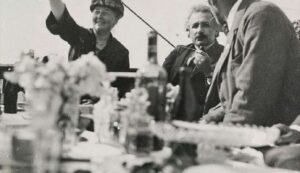
“If I had an hour to solve a problem I’d spend 55 minutes thinking about the problem and 5 minutes thinking about solutions.”
― Albert Einstein
When I look back on it, it was an amazing opporunity to work on an absolute relic of New York history, and to really develop my own systems of self learning and modeling of mechanical systems. This experience taught me the importance of thorough problem definition and meticulous documentation, skills that have been invaluable throughout my career. My hands-on field experience and dedication to understanding each system’s intricacies have consistently enabled me to provide efficient, cost-effective solutions for complex engineering challenges.
Recent Comments